

Removable vs Fixed Battery: Which Electric Bike Should You Buy?
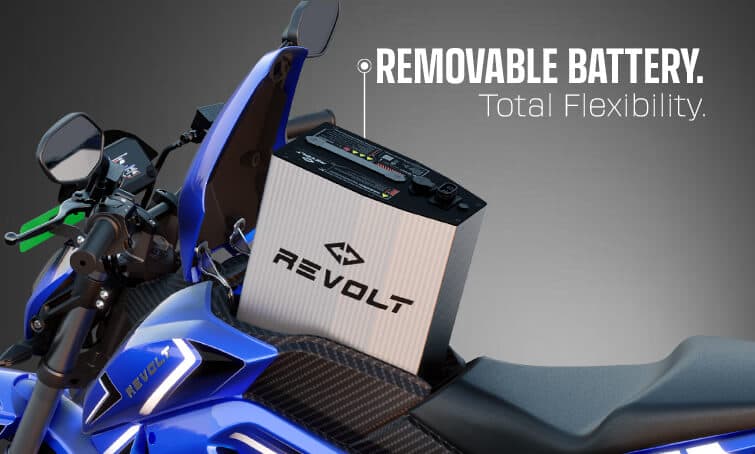
Of all the questions that come up when shortlisting an electric motorcycle, removable battery vs fixed battery is one of the most practically important, and one of the least understood. It's not a matter of one being objectively better, it's about which one matches how and where you'll actually charge, day in and day out, for as long as you own the bike. Get this decision wrong and you'll spend years working around an inconvenience that a five-minute test ride and a bit of planning could have avoided entirely. A removable battery pack can be taken out of the bike and carried, typically on a trolley handle, to a wall socket anywhere, your apartment, your office, a shop. You don't need a dedicated charging point at your parking spot. The Revolt RV1+ removable battery bike uses this approach, which makes it particularly well suited to riders in apartments or hostels without assigned parking near an outlet. Our breakdown of RV1+ charging time and running costs covers the practical numbers in more detail, including how charging time compares to a typical fixed-pack setup. A fixed battery stays mounted in the bike and charges through a port, similar to plugging in a laptop, rather than being removed. The Revolt RV400 electric bike has historically offered a removable option, and fixed-pack designs on other models trade portability for a larger battery capacity in the same footprint, since the pack doesn't need a handle, wheels, or a separable housing. That generally means better energy density and, in many cases, better protection against dust and water ingress since there's no removable joint to seal. Apartment or hostel with no dedicated EV charging point nearby: removable battery is the practical choice Independent house or workplace with a socket next to your parking spot: fixed battery works fine and often charges faster Frequent long-distance or highway riders: fixed batteries generally offer more usable capacity per kg of bike weight Riders without secure covered parking: a removable pack lets you charge indoors and avoid weather exposure Shared or society parking with a common charging point: either format can work, but confirm the socket type and access rules before assuming Removable packs are built to be carried, so they're constrained in size and weight in a way fixed packs aren't. If maximum range from a single charge is your top priority, it's worth comparing the specific capacity figures on the model page rather than assuming either format wins by default. Revolt's electric bike single charge range guide walks through how real-world range differs from the rated figure across riding conditions, load, and terrain, which matters just as much as the battery format itself. For a wider look at which current models offer removable packs, our roundup of top electric bikes with removable batteries compares the field directly, so you can see how different manufacturers approach the same trade-off. Charging speed depends on the charger's power output and the battery's chemistry and capacity, not purely on whether the pack is removable or fixed. A removable pack charged from a standard wall socket and a fixed pack charged from the same type of socket will typically take a broadly similar time per kWh of capacity. Where the formats genuinely differ is flexibility: with a removable pack, you can charge it anywhere with an outlet, while a fixed pack ties you to wherever the bike itself is parked. Our guide to how long an electric bike battery lasts also covers how charging habits, not just format, affect long-term battery health. A removable battery introduces one more thing to think about: securing the pack itself when it's not in the bike, whether that's inside your home, at your workplace desk, or wherever you've carried it to charge. Most riders find this a minor adjustment rather than a genuine inconvenience, since the battery typically lives wherever you already spend most of your time. A fixed battery, by contrast, stays locked into the bike itself and inherits whatever physical security the bike's parking arrangement already provides, which some owners find simpler to reason about. If you live somewhere with a pronounced monsoon season or extreme summer heat, it's worth thinking about how each format handles those conditions. A removable pack that you carry indoors to charge is naturally shielded from monsoon flooding or waterlogged parking areas during the charging window itself, even if the bike is parked outside. A fixed pack, being permanently sealed into the bike, generally carries a stronger dust and water ingress rating overall, since it doesn't need a removable connector interface that could be a weak point for moisture over time. Beyond day-to-day charging, think about resale and long-term servicing too. A removable battery is easier to replace independently of the bike itself if it needs swapping out after several years, since the connector interface is designed for repeated insertion and removal. A fixed battery, while generally more weather-sealed, typically requires a service center visit for replacement rather than a straightforward DIY swap. Neither is a dealbreaker on its own, but it's worth factoring into your expectations for how ownership will feel five or six years down the line. If you had to boil this decision down to one question, it would be this: do you have reliable, secure access to a power outlet right next to where your bike is parked, every single day, for years to come? If the honest answer is yes, a fixed battery generally gives you more capacity and simplicity. If the honest answer is no, or even uncertain, a removable battery removes that dependency entirely and is very likely the more practical choice for your specific living situation.What a Removable Battery Actually Means
What a Fixed Battery Means, and Why It's Not a Downside
The Real Decision Factor: Where Do You Park?
Range and Capacity Trade-offs
Charging Speed: A Factor Buyers Often Overlook
Security and Theft Considerations
Weather and Seasonal Considerations
Long-Term Ownership Considerations
Making the Final Call